SPACE LOGISTICS AND
ORBITAL TRANSPORTATION
SERVICES

The Visionary

Captain John Carter

Founder & Chief Architect

With over 20 years of aerospace engineering expertise, Captain John Carter founded Sat-Orbit iOS to democratize access to space. Our mission is to provide reliable, sustainable, and cost-effective orbital logistics and satellite servicing for a new era of global connectivity.

Our Core Values

Innovation

Pioneering the future of space mobility.

Reliability

Zero tolerance for failure in the final frontier.

Sustainability

Responsible orbital management for generations.

Our Solutions

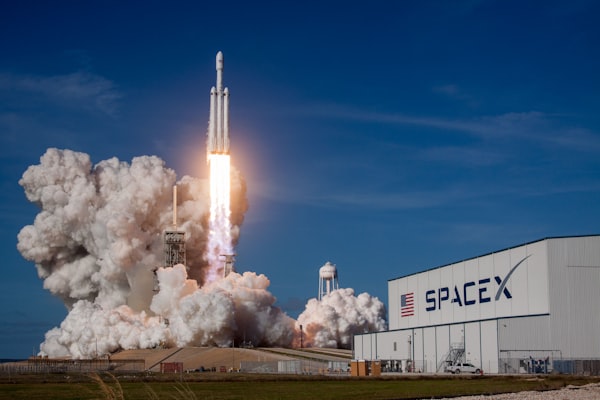
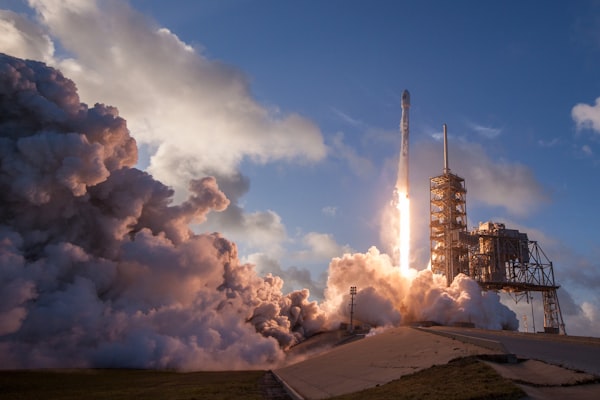
Launch and deployment

Launch & Deployment

Space Transportation (re)Invented

Advanced satellite services

Advanced Services

The second life of ION

In-orbit servicing GEA

In Orbit Servicing: GEA

Extending Satellite Lifetime Through Advanced Space Operations

Next-Gen Tech

We combine AI-driven autonomous navigation with highly efficient electric propulsion systems. Our proprietary software suite allows for real-time orbital adjustments, cooperative satellite operations, and debris mitigation, ensuring our assets—and yours—remain safe and productive in the harsh space environment.

Satellite technology

Events

Farnborough International Airshow venue
Farnborough
International
Airshow
20 - 24 July 2026

Farnborough International Airshow 2026

Farnborough, UK
World Space Business Week
WSBW
14 - 17 September

World Space Business Week

Paris, France
ESA Industry Space Days
Industry
Space Days
2026
16 - 17 September 2026

ESA Industry Space Days 2026

Noordwijk, The Netherlands

Visit
Our
Online
Shop!

Sat-Orbit iOS merchandise

Global Partners

3,200+
Satellites Deployed
99.8%
Mission Success Rate
10+
Years Active in Orbit

Ready for the Next Frontier?

Let our team help you navigate the complexities of modern space logistics.

Contact Our Team

About Sat-Orbit iOS

Founded by Captain John Carter in 2016, Sat-Orbit iOS has rapidly become a global leader in commercial space transportation and in-orbit servicing. We are a team of engineers, physicists, and visionaries dedicated to building the infrastructure necessary for a thriving space economy.


Our Mission

To provide reliable, scalable, and sustainable access to space, enabling innovations that improve life on Earth and expand humanity's reach beyond our planet.

Our Core Services

From launch to end-of-life, we provide comprehensive solutions tailored to the needs of commercial and government entities. Our technology is designed for flexibility and efficiency.

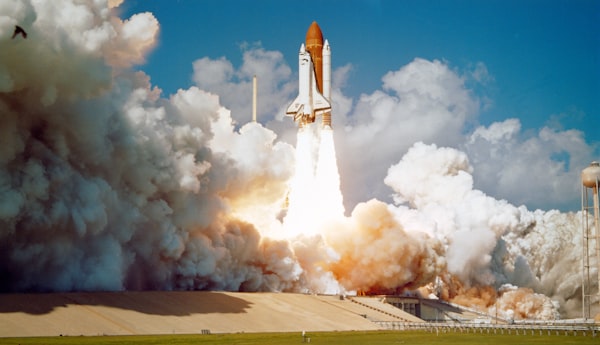
Launch and deployment

Launch & Deployment

Precision placement of payloads into Low Earth Orbit (LEO) and Geostationary Transfer Orbit (GTO).

Advanced satellite services

Advanced Satellite Services

ION-based second-life missions, hosted payloads, and active debris removal demonstrations.
In-orbit servicing GEA

In-Orbit Servicing

Our GEA fleet provides refueling, repair, and orbital adjustment to extend the life of critical space assets.

Visit
Our
Online
Shop!

Sat-Orbit iOS merchandise

Coming Soon!

Our exclusive line of mission patches, replica models, and space-grade apparel.

Contact Our Team

Ready to launch your mission or want to learn more about our services? Reach out to us. We're here to help you navigate the stars.

Owner & Lead Engineer

Captain John Carter

john.carter@sat-orbit-ios.space

Mission Control

+1 (800) 555-SPACE (7722)

Available 24/7 for launch support

General Inquiries

support@sat-orbit-ios.space

Response within 2 business hours

Headquarters

404 Orbital Station 7, Cape Canaveral,
Spaceport City, FL 32920, USA

Sat-Orbit iOS Space Logistics & Orbital Engineering Library

Technical guides, orbital delta-v calculations, rendezvous safety envelopes, and qualification checklists for launch deployment, hosted payloads, and in-orbit servicing.

Orbital LogisticsSpace Logistics and Orbital Transportation Mission ArchitectureHow launch vehicles, orbital transfer carriers, and last-mile servicing craft coordinate payload delivery, phasing, and end-of-life disposition.Launch & DeploymentLEO and GTO Launch Deployment Planning and Injection AccuracyEngineering considerations for targeting LEO sun-synchronous and GTO injection orbits, managing launch dispersions, and sequencing payload separation.Orbital MechanicsOrbital Transfer Vehicle Delta-V Budgeting and Propellant SizingApplying the Tsiolkovsky rocket equation, Hohmann and plane-change formulas, and deterministic/statistical margins to size OTV propellant loads.Propulsion SystemsElectric Propulsion and Low-Thrust Orbit Raising TradeoffsEngineering tradeoffs in solar electric propulsion (SEP) orbit raising, including thrust-to-power ratios, eclipse duty cycles, and radiation belt exposure.In-Orbit ServicingIn-Orbit Servicing Architecture for Satellite Life ExtensionOperational architectures for extending active satellite lifetimes through docked propulsion takeover, anomaly inspection, orbit correction, and end-of-life retirement.Autonomous NavigationAutonomous Rendezvous and Proximity Operations Safety EnvelopePhased RPO mission design, relative sensor fusion, passive-safe walking safety ellipses, and fault-tolerant collision avoidance for orbital servicing.In-Orbit ServicingIn-Space Satellite Refueling and Propellant Transfer InterfacesFluid coupling architectures, microgravity liquid-vapor management, pressure-fed transfer dynamics, and safety interlocks for orbital propellant replenishment.Advanced ServicesHosted Payloads and Second-Life Orbital Carrier OperationsLeveraging post-deployment orbital transfer carrier buses for hosted technology demonstrations, sensor experiments, and multi-customer rideshare missions.Orbital SustainabilityActive Debris Removal and Post-Mission Disposal ComplianceRegulatory post-mission disposal timelines in LEO and GEO alongside active debris removal architectures for non-cooperative derelict objects.Space Traffic ManagementConjunction Assessment and Automated Collision Avoidance WorkflowsEvaluating Conjunction Data Messages, probability of collision thresholds, covariance uncertainty, and low-thrust vs impulsive avoidance maneuvers.Launch & DeploymentPayload Interface Control and Environmental Qualification StandardsMechanical separation hardware, launch load envelopes, random vibration, pyroshock, and thermal vacuum verification for orbital payloads.Mission ControlCCSDS Telemetry, Telecommand, and Autonomous Operations LinksInteroperable CCSDS packet framing, S/X/Ka-band link budgeting, ground-network pass scheduling, and onboard FDIR for orbital transportation fleets.